Rural small-scale farmers in Ghana need a way to harvest cassava more easily.
How can we create a tool that is more sustainable and helps farmers support their families?
What am I thinking about?
This was my first experience researching and designing in a culture different from my own. Aware of this, I took a moment to pause before starting the work to better understand the cultural differences. Additionally, I was fortunate to have colleagues from Ghana who were there to guide me throughout the process.
-
Lead designer & researcher
-
Research & Industrial
-
Sep 2017 - Mar 2018
Research Stage
DESK RESEARCH
Understanding the space was necessary prior to and while conducting field research. In particular the target market, competition and the potential design scope.
FIELD RESEARCH
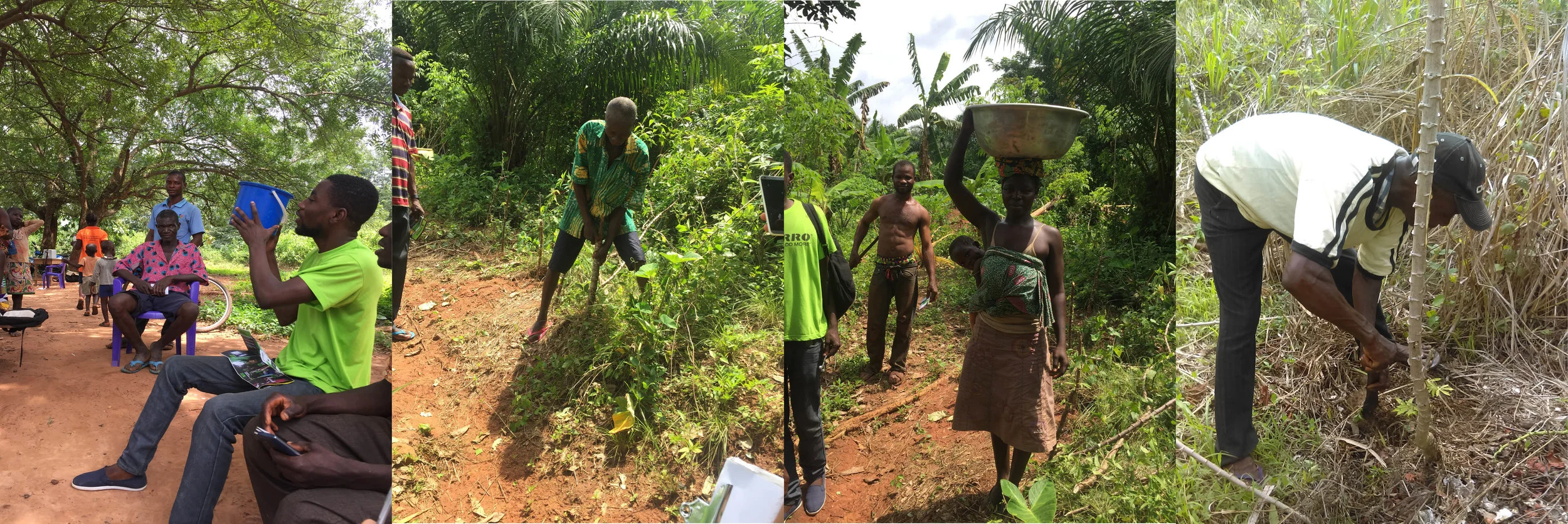
We started by just observing many different farmers harvest their cassava. From this, we were able to understand the distancce the typically have to travel, what equipment they currently use and how strenuous a process it is.
We also conducted interviews and focus groups. This allowed us to understand the magnitude of the problem and what they considered the most pressing issues.
All of this information allowed us to better appreciate how a tool that we design might be able to help them.
Prototyping
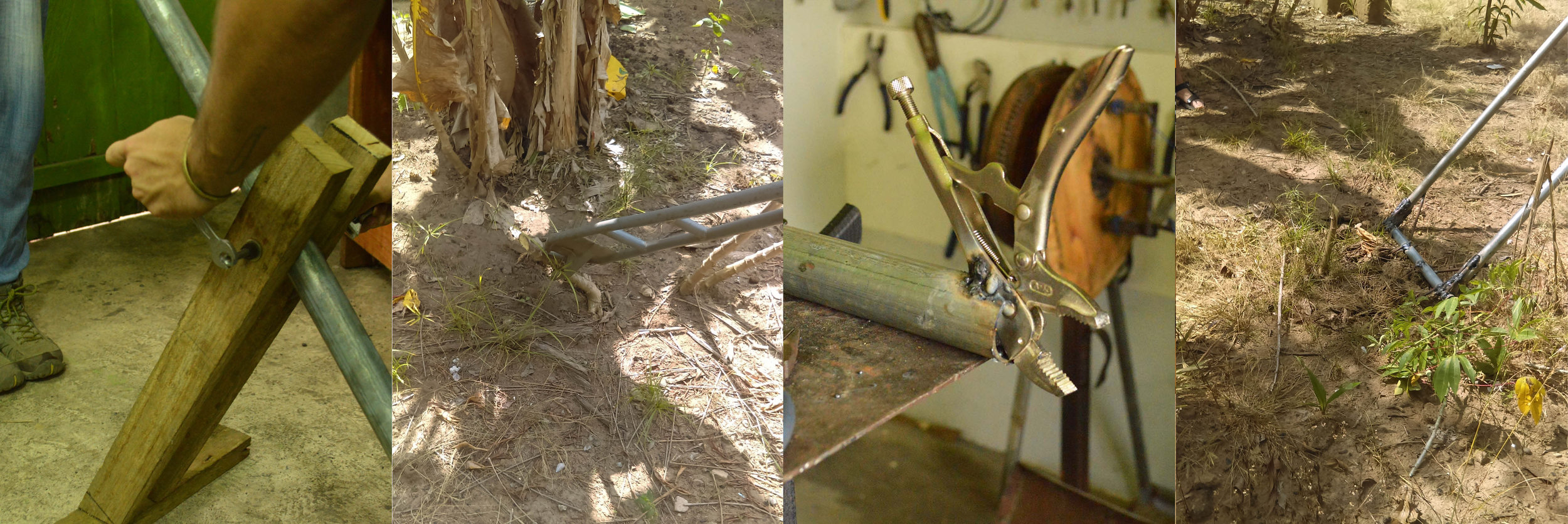
Initial prototyping was testing how the cassava root could most effectively be removed from the ground.
Three possible methods for doing this were tested
1. Attaching the cassava to the end of harvester.
2. Attaching the cassava to the centre of the harvester
3. Digging the root out from below
Testing
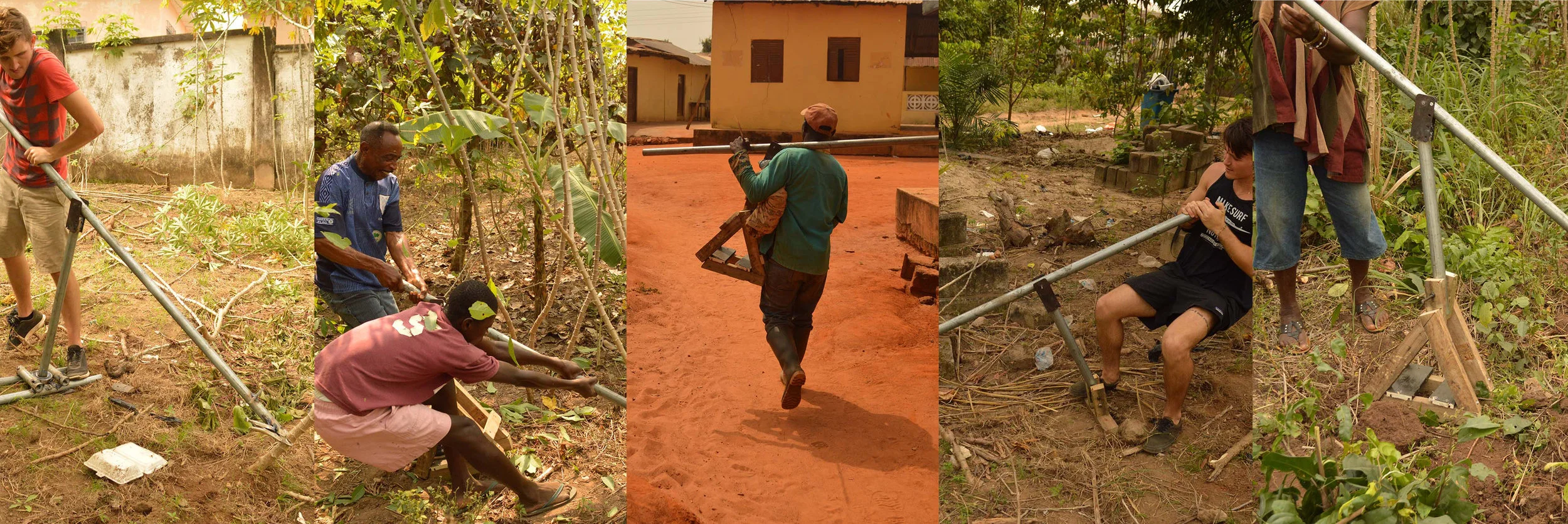
Of course, once we had finished the prototyping, we had to test it in the field with farmers. We visited many different farmers, from ones that we had visited before, to farmers in the neighbourhood.

The aim at this stage was to try the harvesters in as many different conditions and to get as much feedback as we could before moving onto the next stage.
Findings
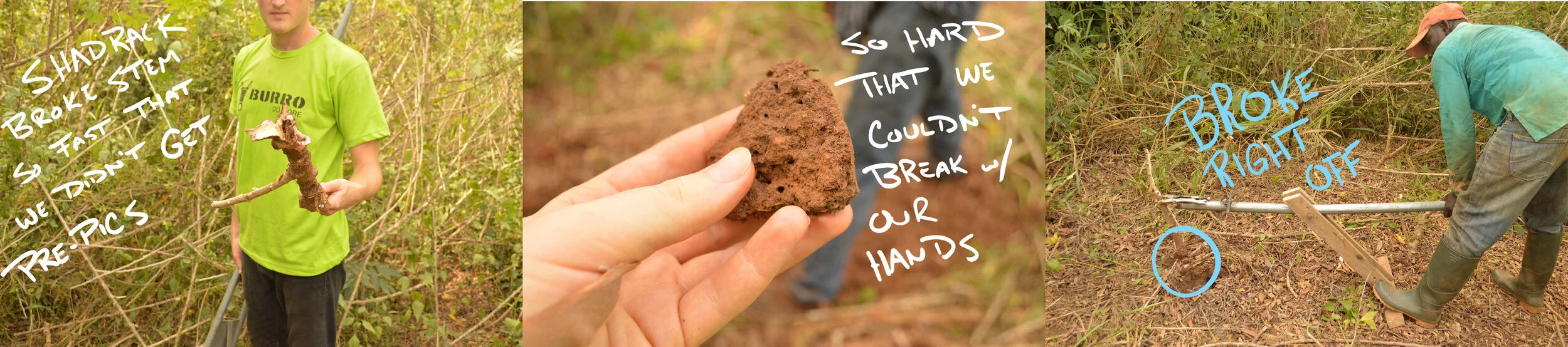
After months of testing, we had come up with a design that worked in any situation we could find. And then the dry season came and changed everything. We came to the conclusion that we needed to do more observations in these conditions in order to design a harvester that could work in all seasons.
While there is more work to be done, that will be taken on by future teams, we know that this harvester would greatly ease the work of small-scale cassava farmers.
We also know that the most economically beneficial tool would need to ease strain and reduce harvesting time in the dry season.
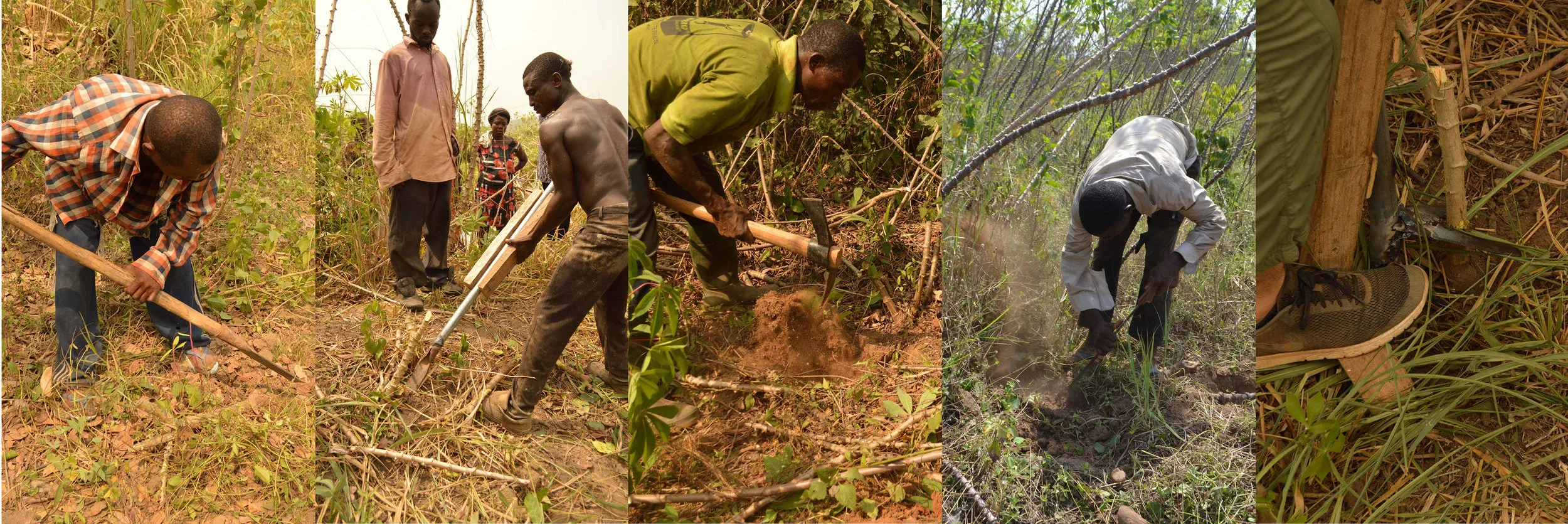
It was clear from our research that farmers valued a tool like this and reduced the strain of harvesting cassava, not only in terms of time but bodily strain as well.
What was the impact?
What came next?
Another team continued our work after we left, and was able to continue validating the need for a tool like this for small-scale farmers in Ghana.
Unfortunately, the project and company came to an end due to international spending cuts.