Roughly 232,658 people are displaced each year due to sudden natural disasters.
Along with this comes huge mental strain. How can we help people deal with these events so that they can move forward in a healthy way?
What am I thinking about?
This is a sensitive topic, and this app can come into a person’s life at a very emotional time for them. I am considering that I am not a mental health expert, so it is important for me to conduct as much research as possible in the time I have, so that I can create an experience that is as helpful as possible for these users.
-
Solo project (thesis project)
-
Research, Service & Interaction
-
Aug 2020 - Dec 2020
Research Stage
EXPERT INTERVIEWS
There is already a lot of work done in this space and it was important to understand this in order to appreciate what problem needed to be solved and how.
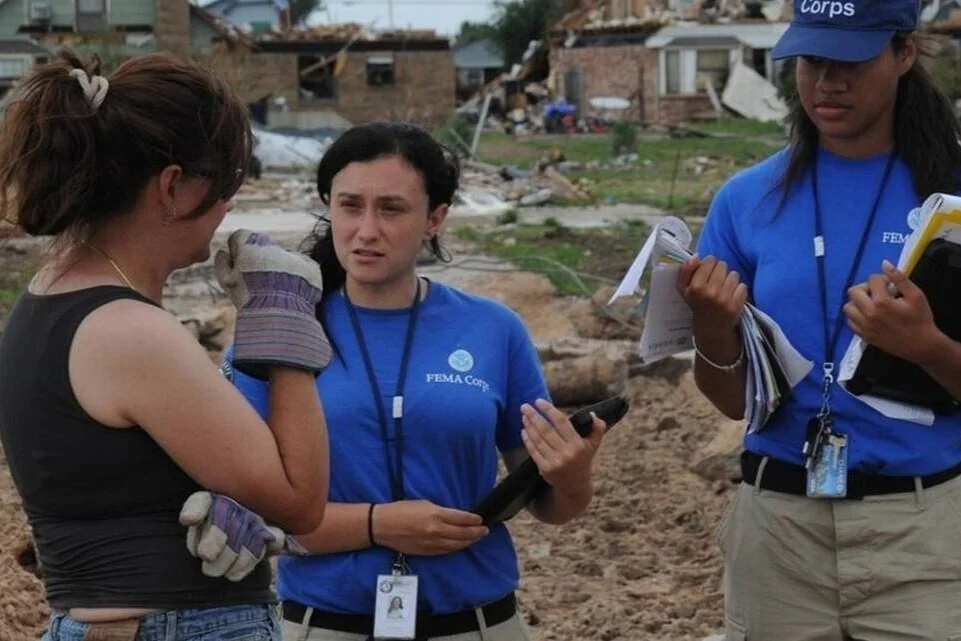
Through this lens, I spoke to mental health professionals with FEMA, early-on-the-ground Red Cross volunteers and directors of charity organisations for displaced persons due to conflict.

USER INTERVIEWS
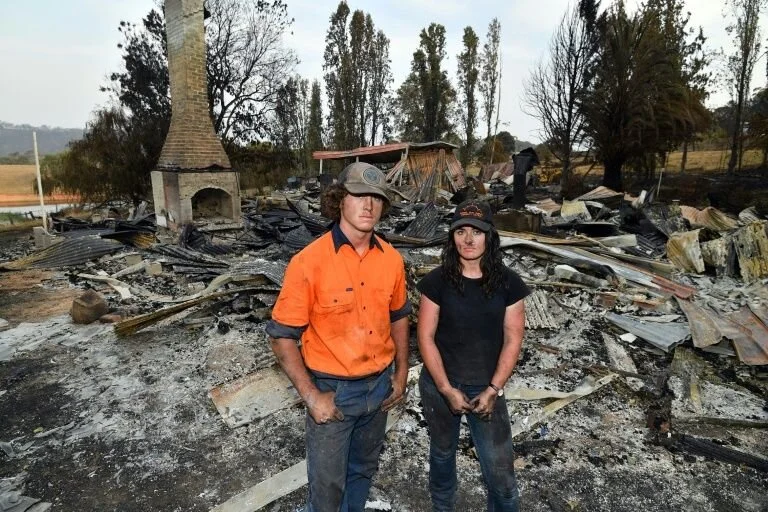
Due to the scope of the project, I spoke to a wide variety of people affected by displacement. This included reasons such as domestic violence, covid, financial distress, as well as natural disaster reasons.
By speaking with a number of people, I was able to come to understand the common needs that were present when people were displaced expectantly or unexpectantly.

Research Takeaways
TIMING
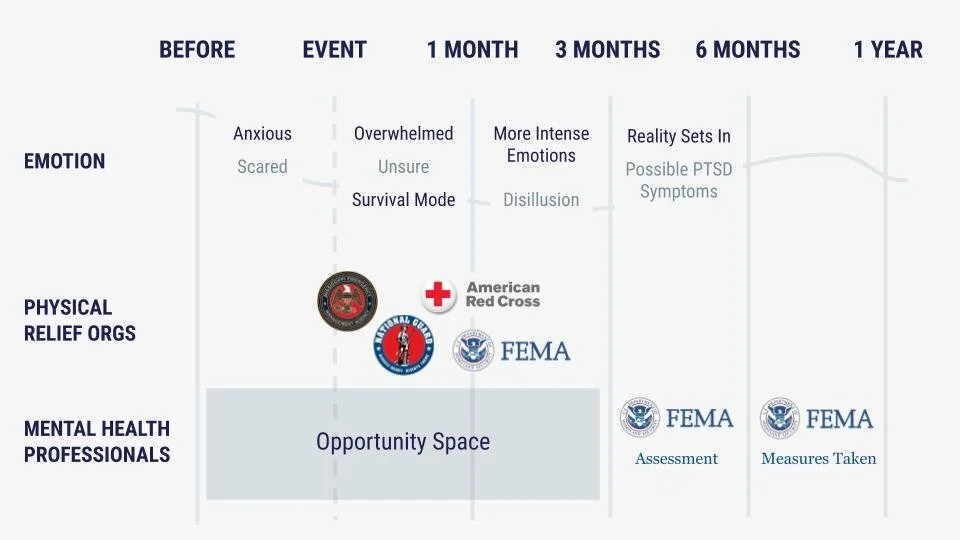
There is a gap in the current landscape for mental health assistance. Currently, mental health professionals don’t come onto the scene until up to 6 months after the event occurs. Earlier interventions could help to diminish the mental strain that comes from these traumatic events.
But what does this solution need to include?
1.
COMMUNITY
From speaking to many people affected by displacement, it became clear that a sense of community was a huge contributor to feeling more able to face the event.
“I find it frustrating trying to talk to my friends because they haven’t gone through anything similar and just try to fix it, which they can’t.” - Joshua.
2.
SELF REFLECTION
Being able to document your feelings can be hugely therapeutic for alleviating the inevitable mental strain.
“I wrote my thoughts & inspirational quotes during that time. I treasure my journals so much now.” - Sue
3.
GUIDANCE
Many people are at a loss when a natural disaster happens and a lot of the distress comes from not knowing what will come next. A simple outline of what could be expected can be hugely beneficial in moments like this.
“I felt such a loss of control ... the worst part was the uncertainty of not knowing where I was going to end up or when.” - Chaznie


Final Design
Halo is an application that allows a displaced person to reflect on the natural disaster event that has happened to them and connect with others who have been through similar experiences.
I received very positive feedback from participants and advisors. They highlighted that this would be very impactful for them and saw great potential in it.
What was the impact?
What came next?
Since this was a thesis project, I was unable to pursue it beyond graduation. However, given the opportunity, I would like to develop it further and explore additional ways it could create a meaningful impact.
I would also love to conduct more research and engage in in-person observations, which were not possible during the project due to pandemic restrictions.