
Project Spectrum
Service Design
2020
user research / human-centred design / prototyping / illustrator
Problem Statement
Hopelab need a way to bring their Chatbot to LGBTQ+ youth in an organic seamless way.
They came to our graduate class to help them with this task. Our team were tackling this by looking at ‘how to help professors become better allies and create a more inclusive university environment for LGBTQ+ youth.
My Role
Main Learnings
I was on a team of four that were looking at how professors might become better allies. I contributed to the team by conducting research, synthesising our findings, creating artefacts to promote discussion and delivering our concept to the client.
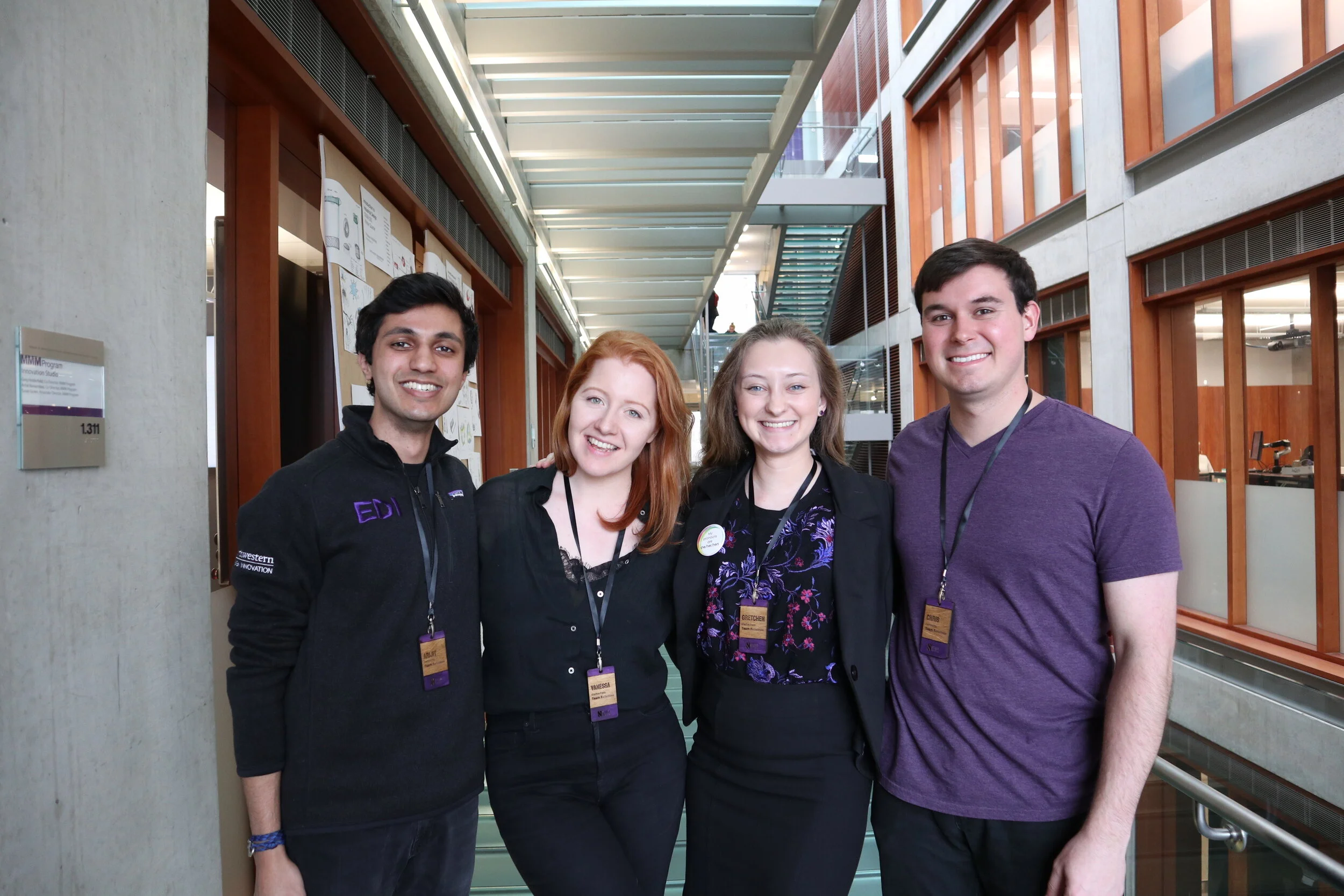
This was my first experience working on a project that was looking solely on a service design. From this I learned:
The value that comes from looking at the whole eco-system that a product will live in and how this may alter the design of the product itself.
The tools that can be implemented to test a service.
The multiple stakeholders that should be considered and the tools that can be used to anticipate their needs.
The value of having a tangible low fidelity artefact when speaking with stakeholders.
The challenges when working in spaces that you may not be familiar with and the due diligence that it necessary in this work.
The benefit in pivoting when research supports a change in direction for a project.
Pre-Research Stage
When presented the topic of looking at LGBTQ+ youth, as a group and the wider studio, it was important that we dived into the topic and tried to get antiquated as quickly as possible. So one of the first things on our agenda was to visit the Centre on Halstead in downtown Chicago.
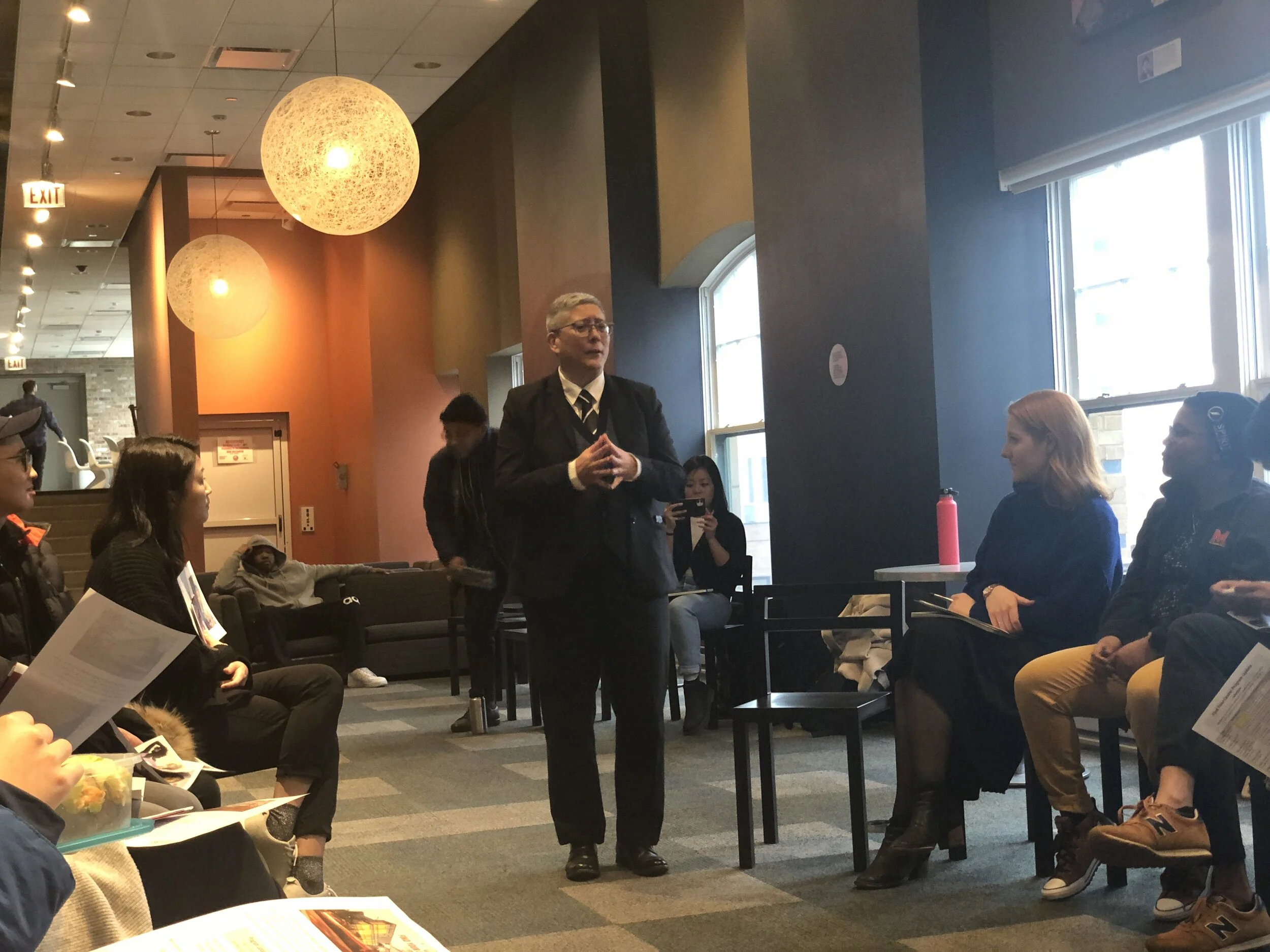
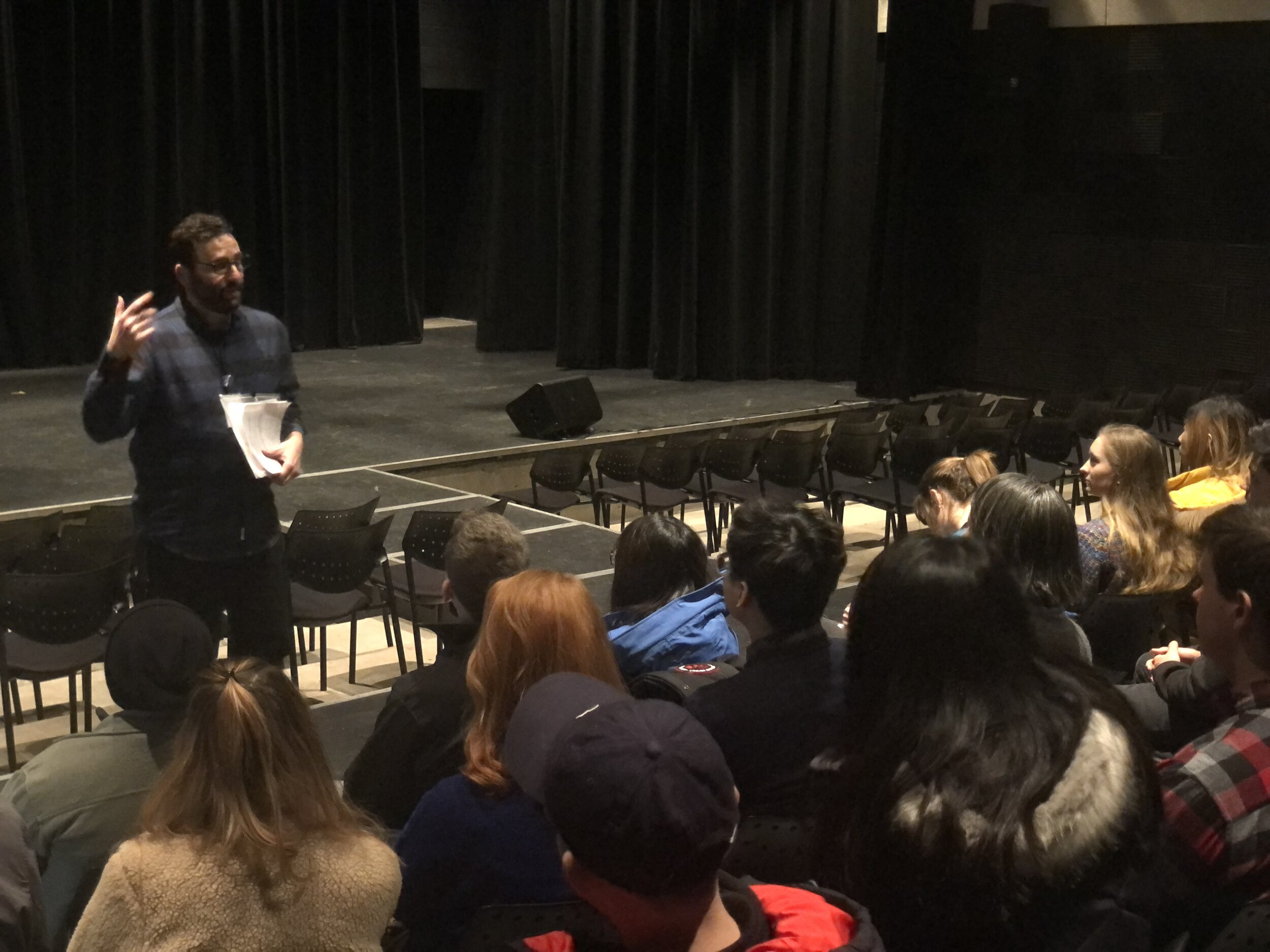
As a studio we held a jeopardy night where various LGBTQ+ terms and historical events were presented. This was in order to open up the conversation between those working on this project and clear up any misconceptions.
Research Stages
We then started speaking to a number of professionals in the LGBTQ+ community including the Office of Equity at Northwestern, professors in the space and students who identified themselves in the LGBTQ+ community.
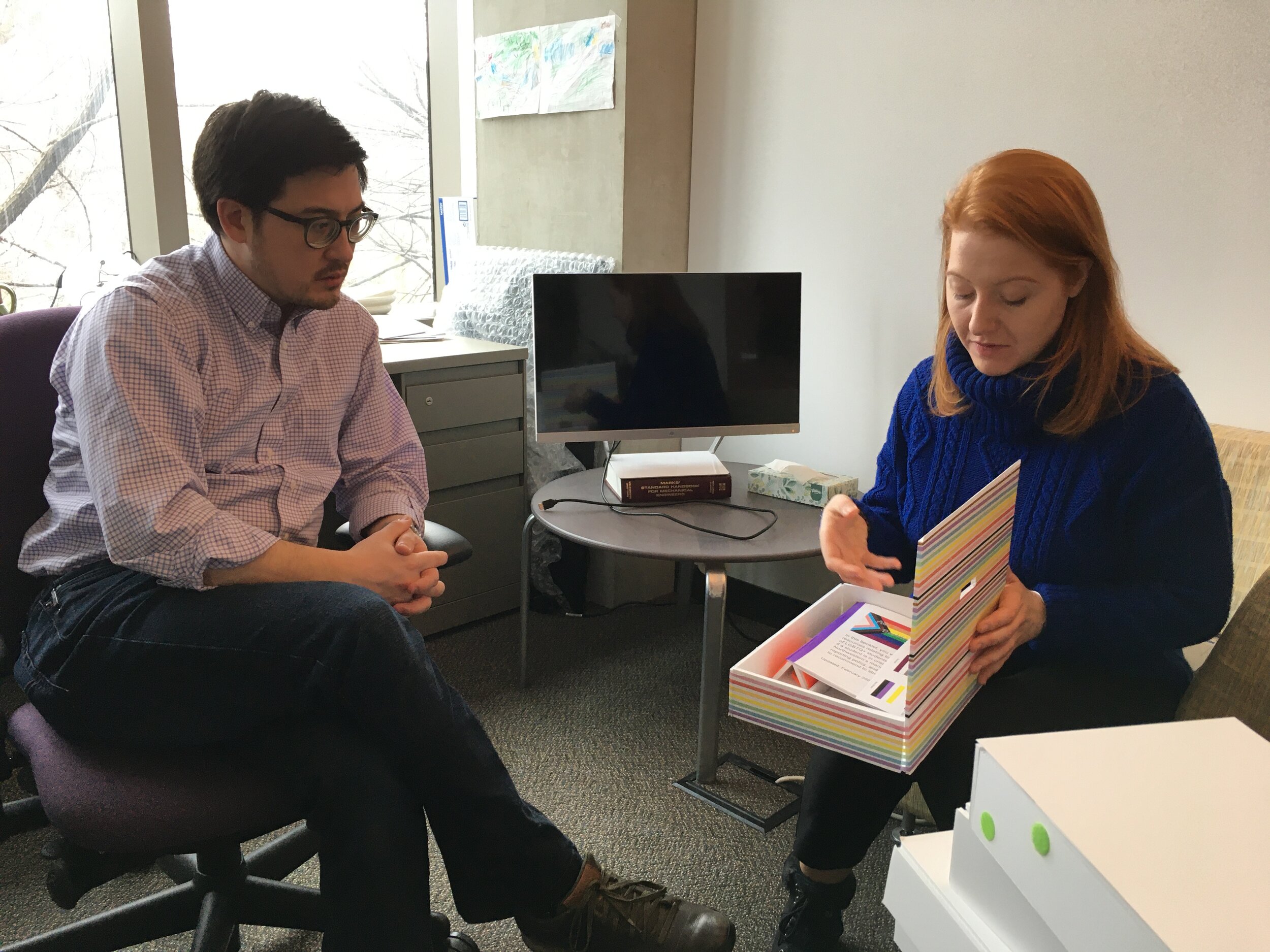
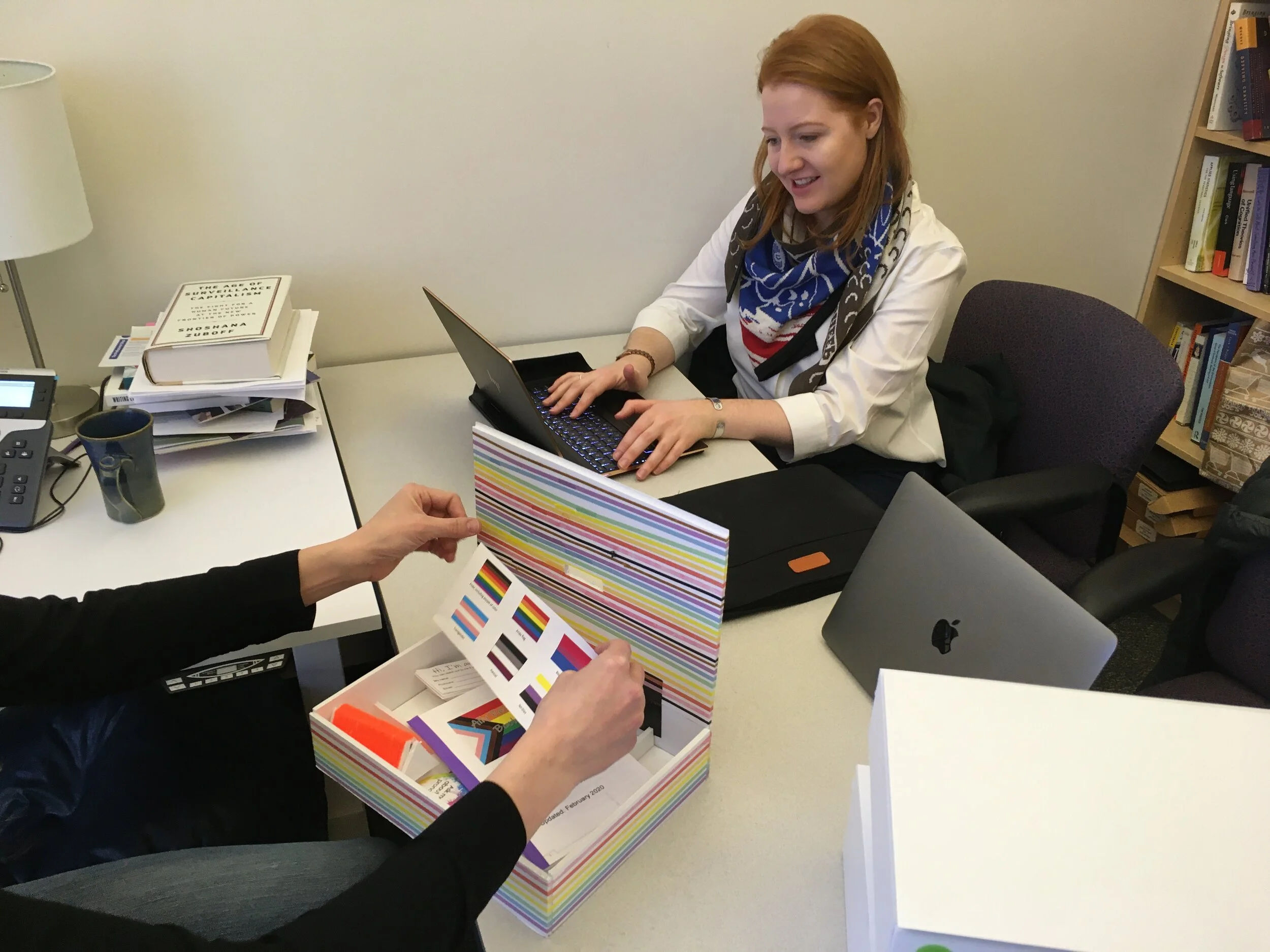
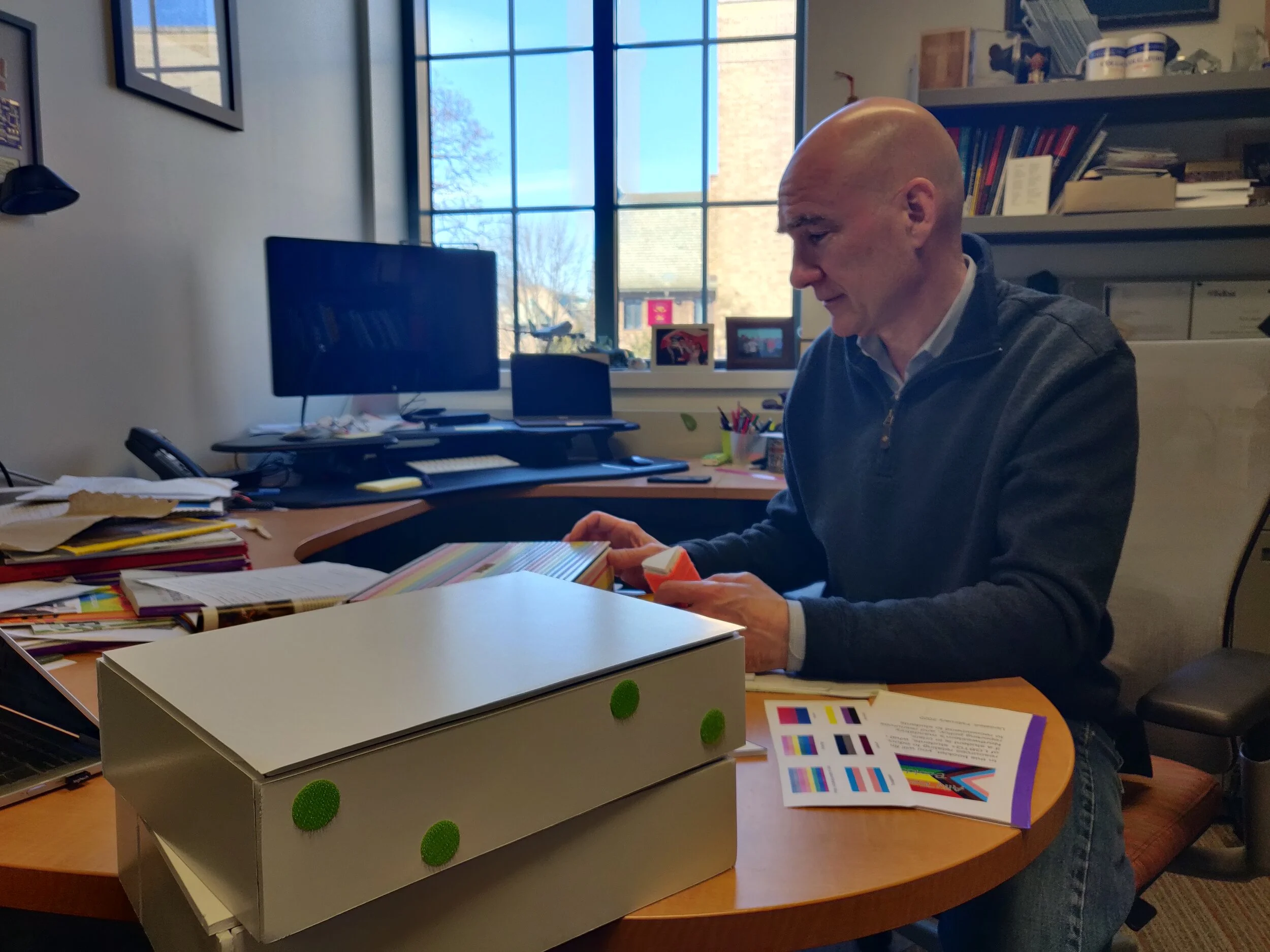
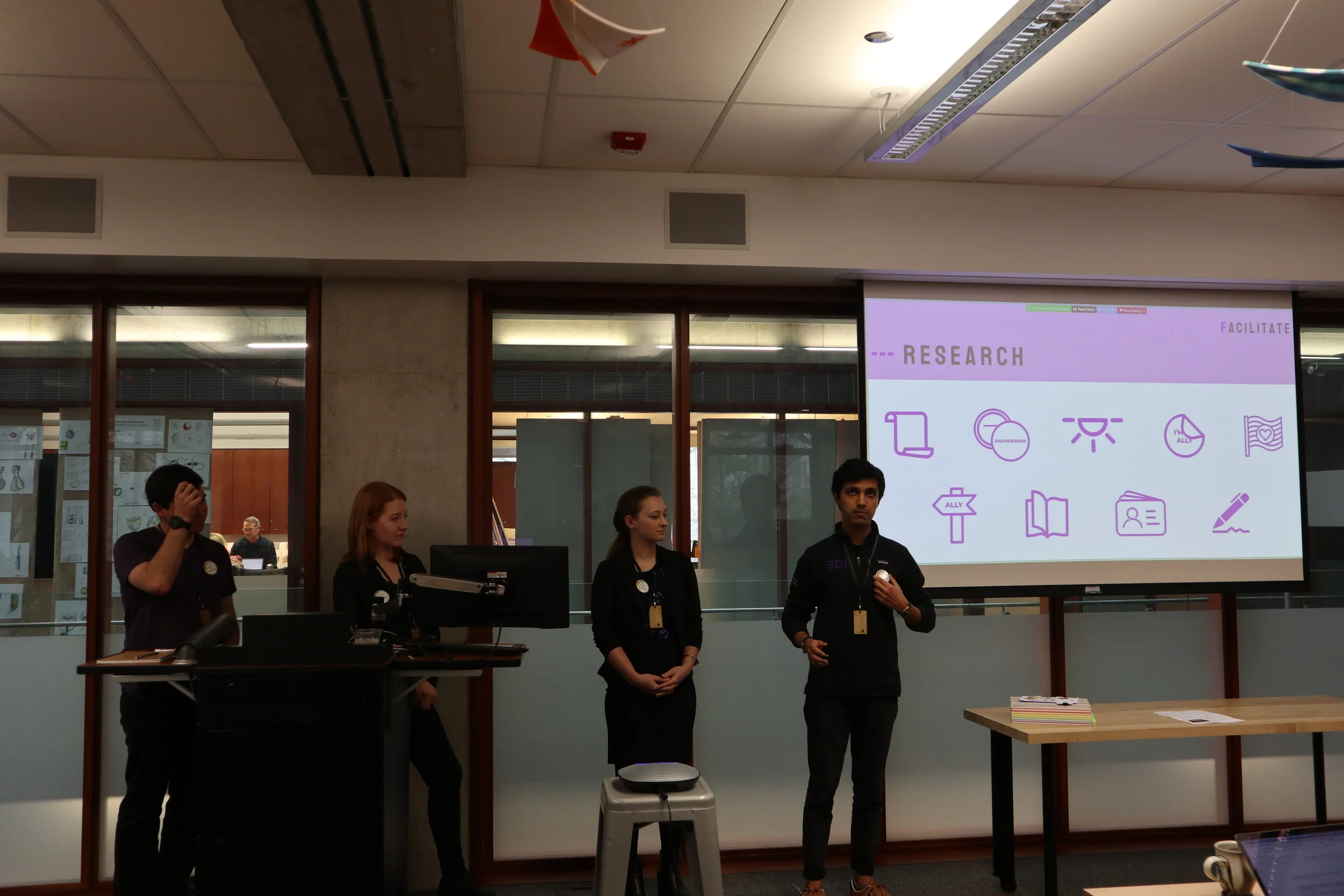
This was done in a number of stages, with the later stage bringing physical artefacts to generate conversation. This included:
Ally stickers
A neon ally light
Pronoun buttons
A Resource booklet
Business cards that included their pronouns
Synthesis
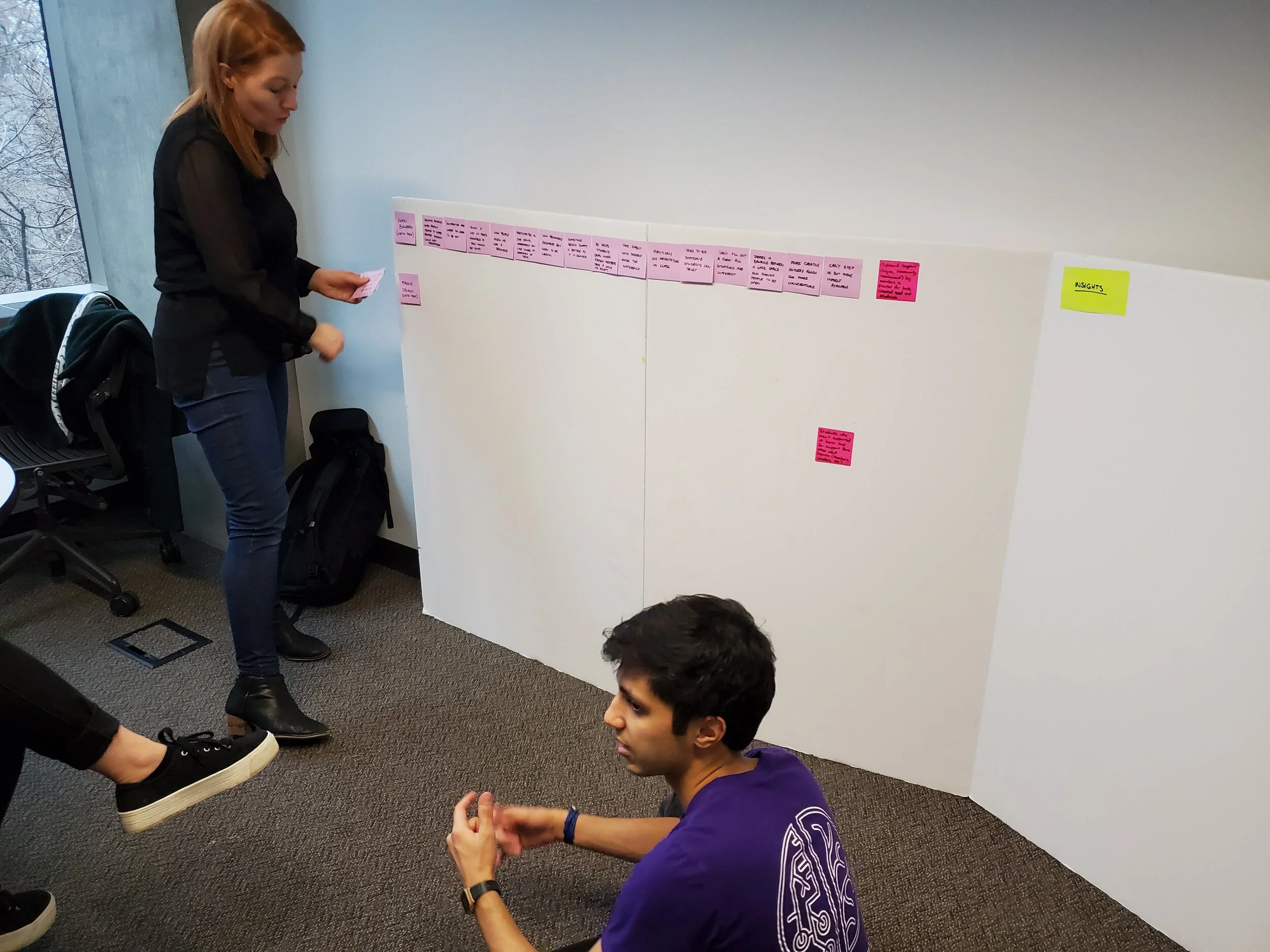
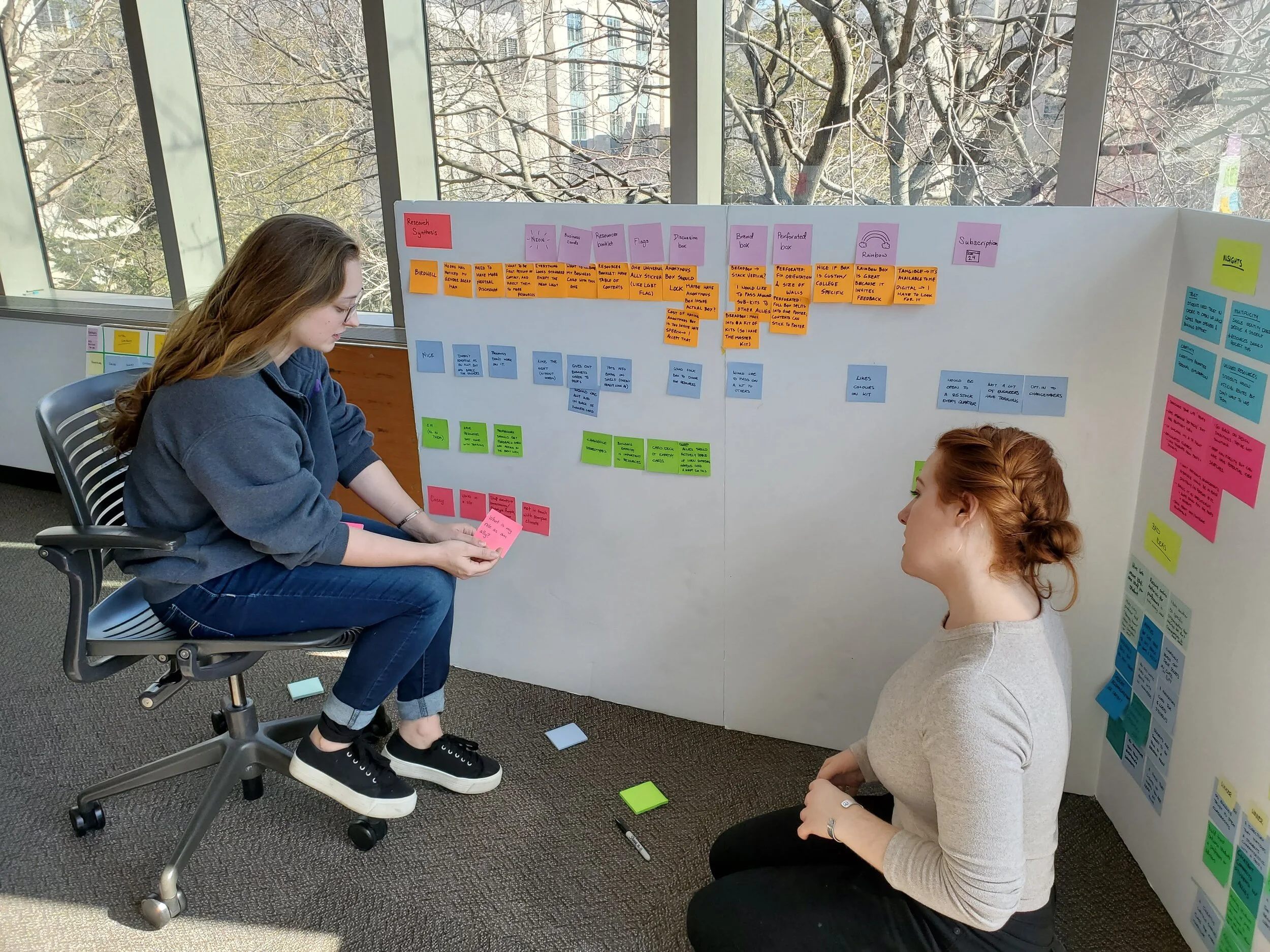
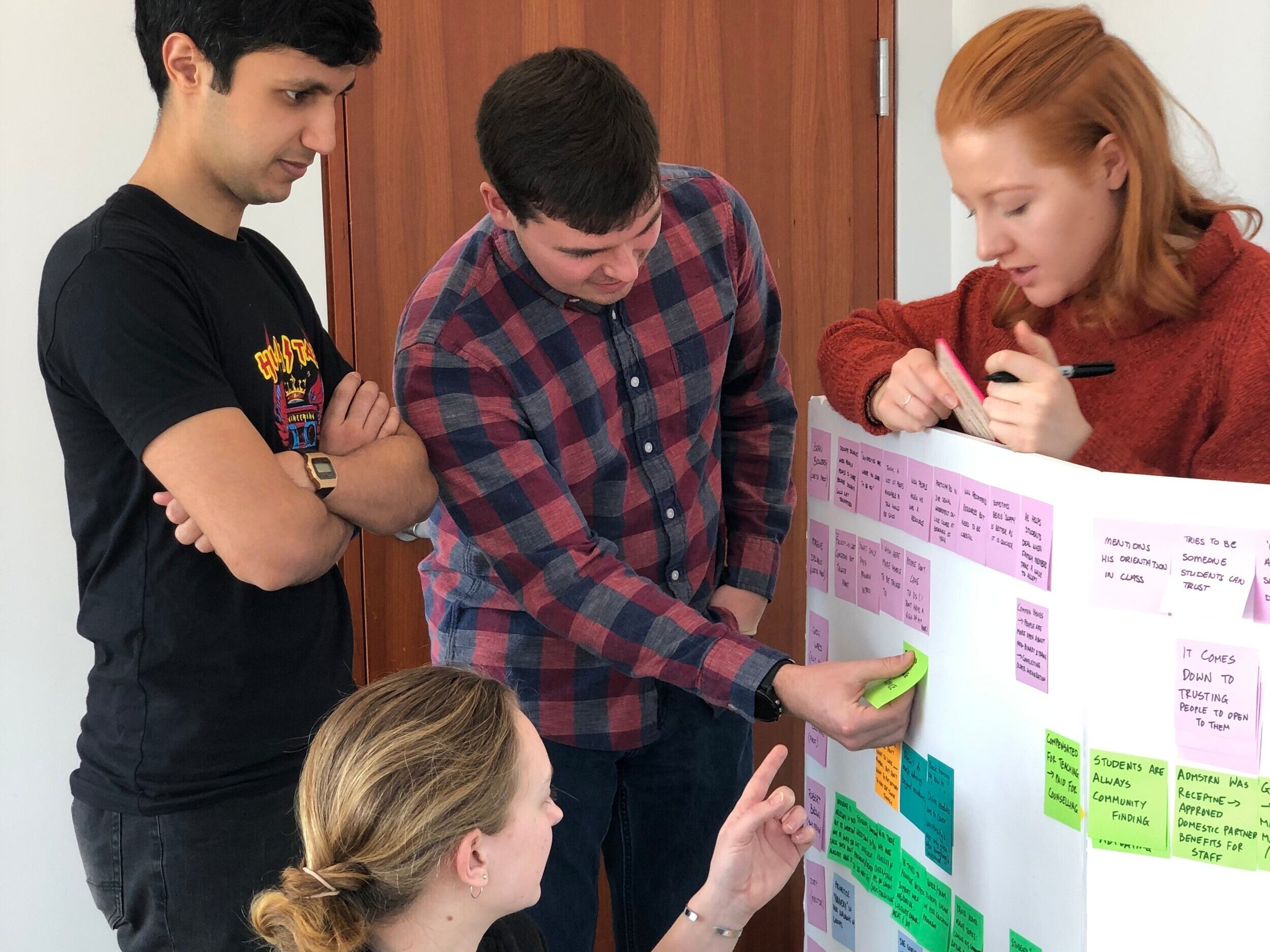
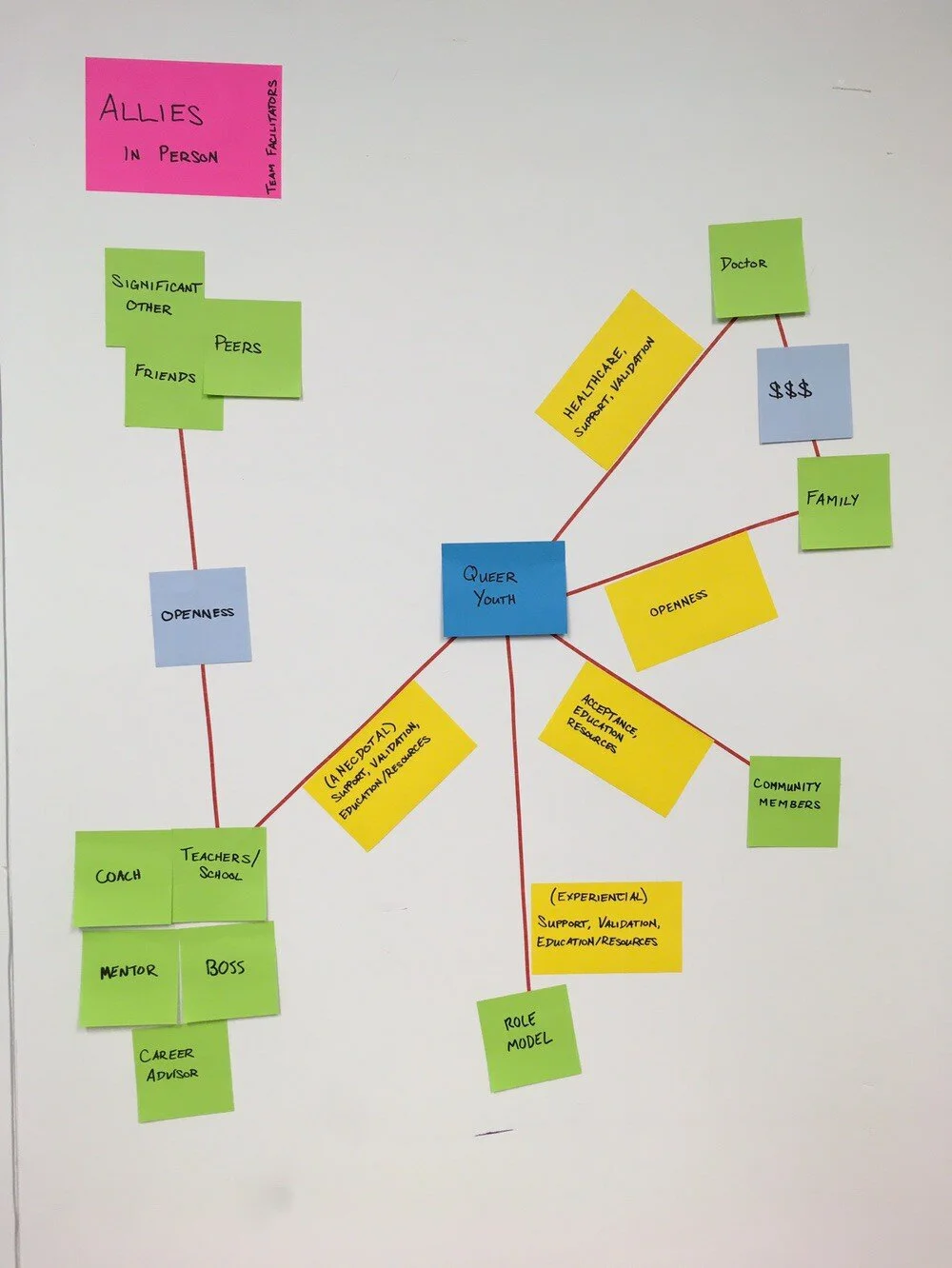
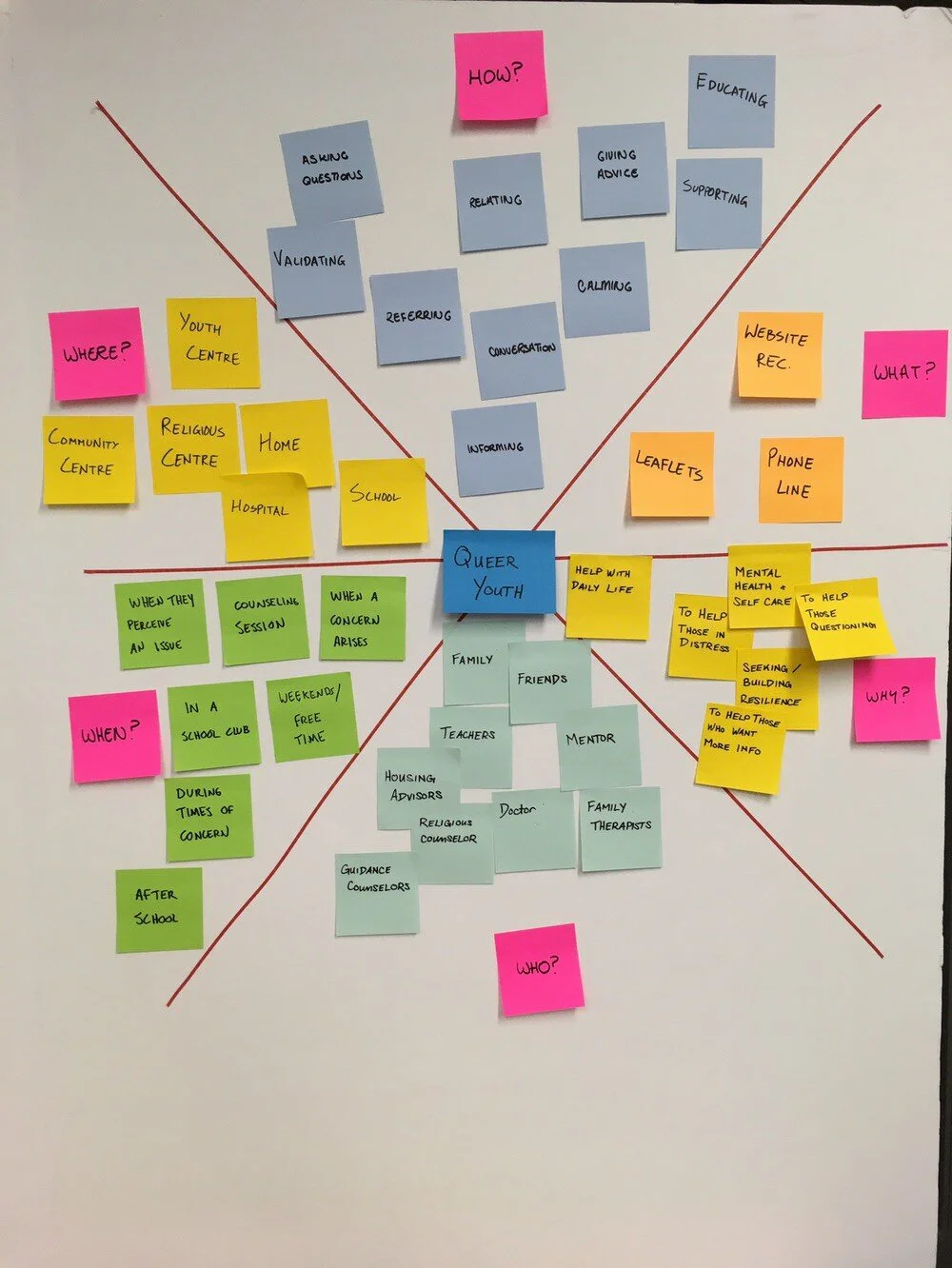
After doing all of this work researching we synthesised our research findings in preparation in order to identify the painpoints and best solution to share with our client Hopelab.
Journey Map & Service Blueprint
Key Takeaways
Time
Professors want to be better Allies but don’t have time to commit to official training.
Artefacts
Novel, physical artefacts, such as more obscure Queer flags, spark curiosity and engagement.
Ally Spectrum
Some professors want to take a more active role in Allyship, while other want to be quiet supporters.
Connection
Professors are curious about the queer space, but don’t feel personally connected.
Final Deliverable
Through our synthesis we identified that there are a number of professors, especially in the engineering school, that don’t feel comfortable being an ally but want to create a more inclusive environment for their students.
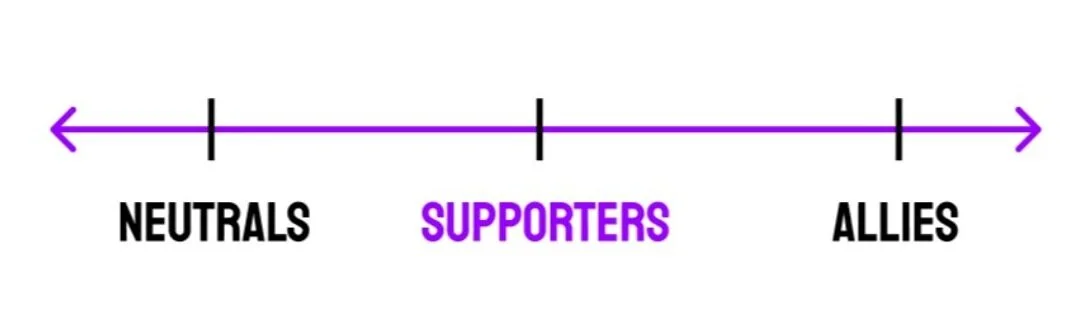
This led us to design for these ‘supporters’, giving them the tools that they are comfortable with that creates a more inclusive university experience.

Our professor can speak with the volunteer in the staff dining hall about the tools that are available for them to use in their classroom or office.
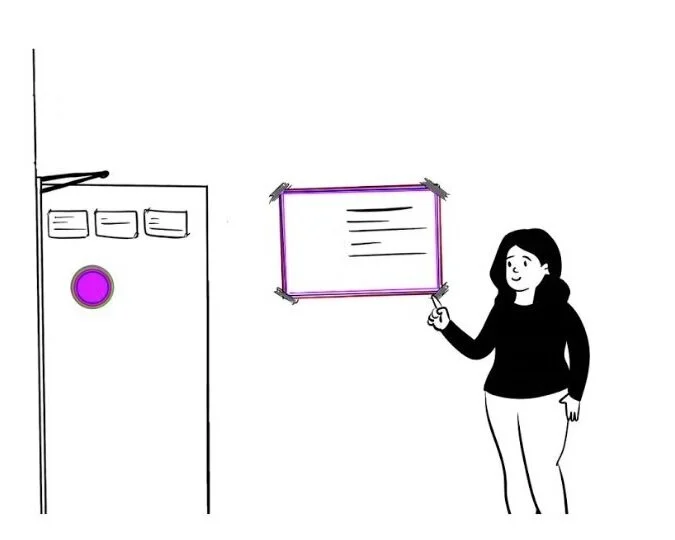
Our professor can then put up the artefacts that they are comfortable with in their office to display that they are open for conversations.

A student can then come to our professor to have a conversation and if they have any follow up questions our professor can pass on resources like a chatbot or to the volunteer from the staff dining hall.
As a studio we created a video that illustrated all of the solutions that we were providing that Hopelab could implement in the future to support their chatbot design.
Overall, we see our solution of a way to bridge the gap between those who are allies and not to the LGBTQ+ community. These ‘supporters’ want to be there for their students who identify as LGBTQ+ but may not feel comfortable to identify or advertise themselves as an Ally.