iRobot Terra Strategic Plan
Design Strategy
2020
user research / human-centred design
Problem Statement
The iRobot team came to our graduate class with the task to explore ways that they could bring their new product, The Terra, to their customers. This product was striving to make grass cutting more simple by making it autonomous.
Their goals were to
Move from only features to experiences.
Move from only offering products to relationships.
Move from one-time purchases to long tern value.
My Role
I was on a team of three where we divided up the work evenly. This work included conducting user research, creating stimulation for these participants, synthesising our findings and presenting our strategic recommendations to the client.
Main Learnings
This was my first opportunity to work on a project that was coming up with a design strategy. I learnt:
How to analyse other service offerings and understanding how they could apply to our project.
How to conduct interviews about a abstract idea without leading the consumer.
How to utilise the work that has already been done by the client, in particular their user base.
Research
This project took place during the Covid pandemic, which meant that all of our interviews were conducted via video chat, in particular Dscout. We conducted 14 interviews with people from different demographics, this included showing them stimuli in order to generate feedback from participants.
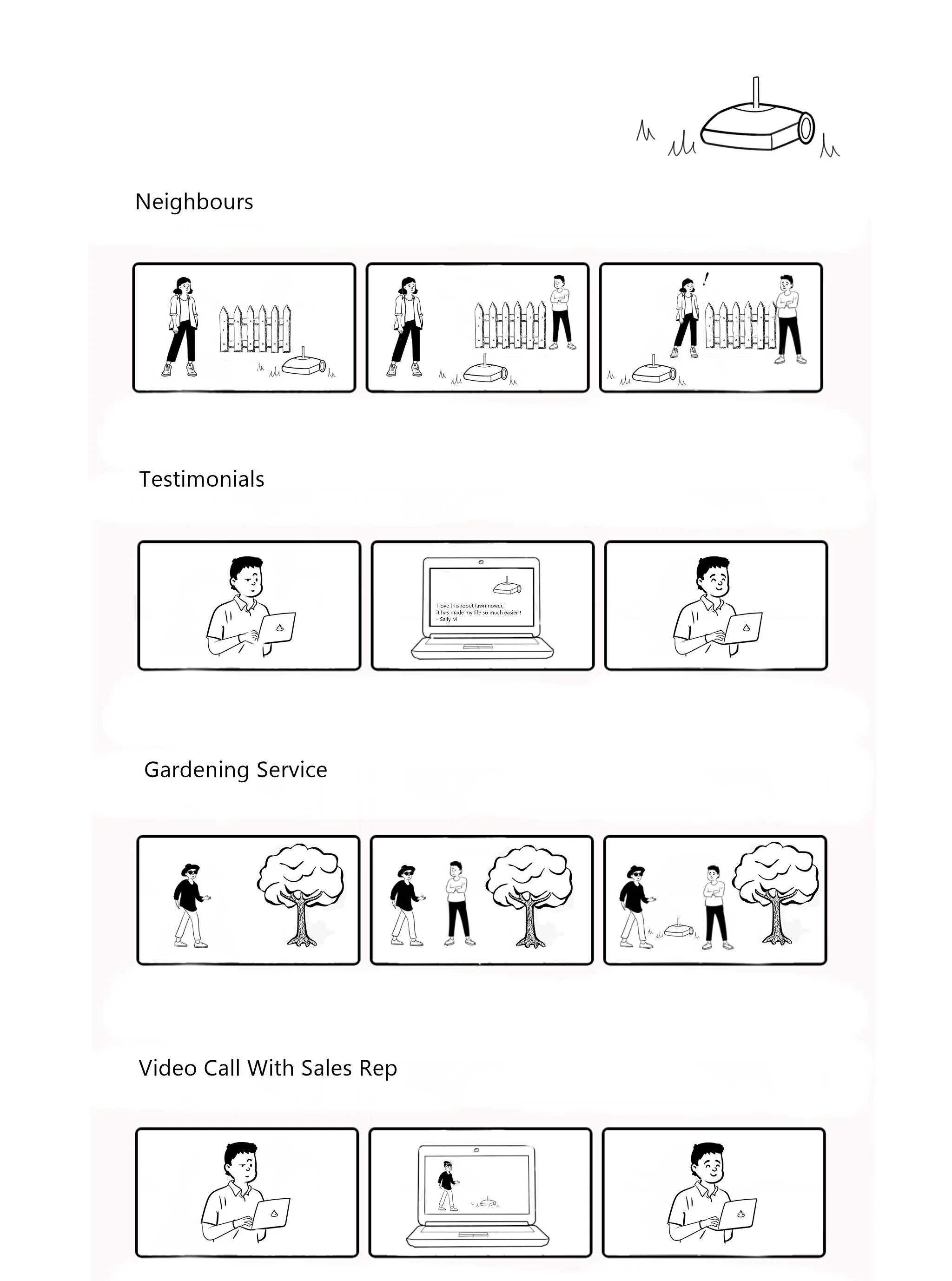
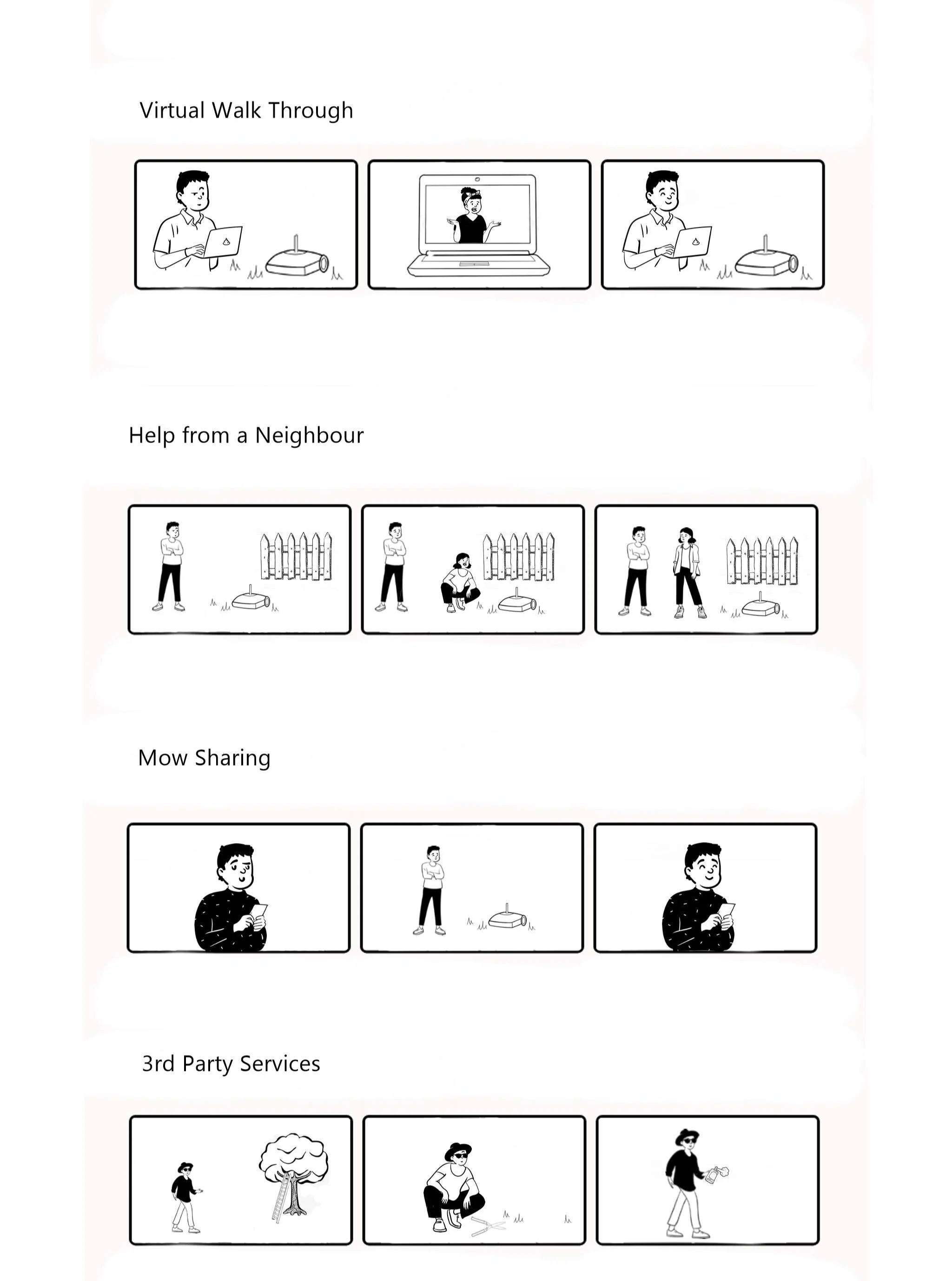
““When I’m working in the yard my neighbors always stop and talk to me. So to have a new technology, it’s definitely a conversation piece and I’d like to be able to tell other people about it.””
Solution
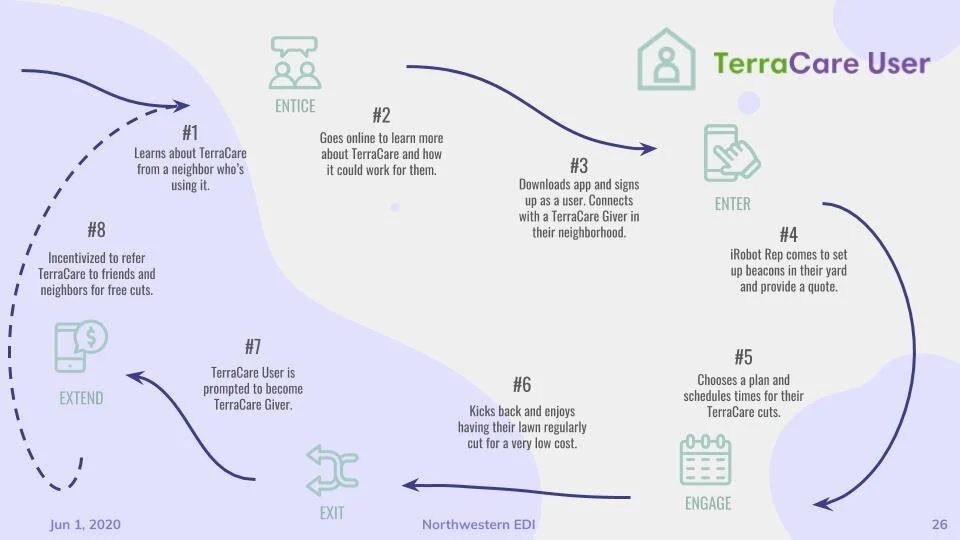
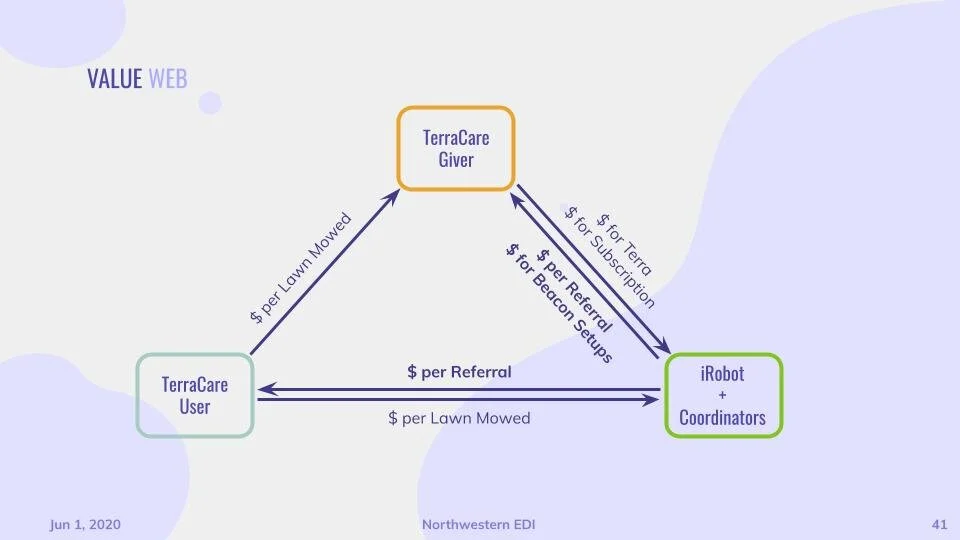
Based on the insights that we uncovered from speaking with potential users, we outlined a strategic plan for the iRobot team. This involved mapping out the various stakeholders journeys through the 5 E’s (Entice, Enter, Engage, Exit & Extend), as well as showing the value proposition and business model canvas.