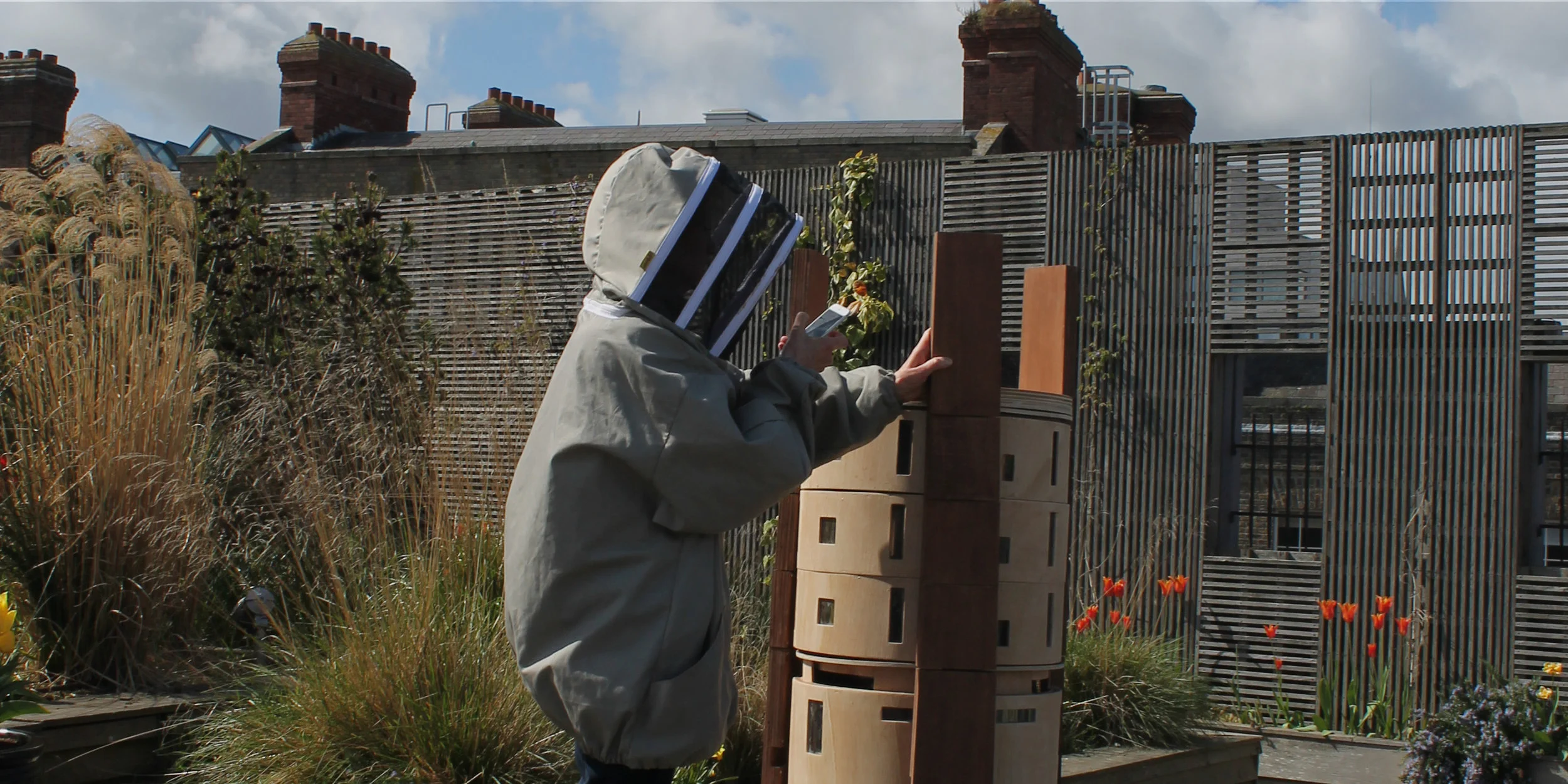
Urban Bee Hive
Industrial Design
2015
user research / human-centred design / cad / prototyping / sketching / indesign
“If the bee disappeared off the surface of the globe, then man would have only four years of life left.No more bees, no more pollination, no more plants, no more animals, no more man.”
Problem Statement
The bee population has decreased by 40% in the past ten years. A solution is needed to stop this drastic decline, that benefits the bees health and that encourages people to take on the responsibility of this epidemic.
My Role
Main Learnings
This was my final year solo project of my undergraduate course. I conducted all of the research and designed all aspects of the project.
This was my first time working on a design project on my own. So I mainly learnt how to:
prioritise my time and resources.
build a larger prototype to a higher fidelity than previously. This included working with a third party who produced some of the parts.
think about the whole eco-system this product was going to live in. Taking into consideration all stakeholders (including the bees
Call to Action
The bees disappearing is a big problem to tackle and not one that will be completely solved with this product.
The main issues that should be addressed to make the biggest difference is the issue of the Varroa mite, finding a means to help beekeepers monitor their hives better and raising awareness about the role everyone has to play in helping save them.
Organisations, such as BeeMune based in Maynooth University, will be considered as possible additions onto this product. Through the ideation and development stage, this will be achieved.
Research Stage
Initial research was just to understand the magnitude of the problem. I go into more detail about the research and findings here.
Ideation Stage
Initial ideation was done by exploring all possible solutions to the bee disappearance problem This was done by doing a lot of sketching. All of this ideation was then narrowed down to three product possibilities.
Concept Development
Wide scope ideation was then narrowed down to three possible project directions. The third concept of the Community Bee hive was chosen as it was the most effective solution and could incorporate aspects of the other concepts into its design.
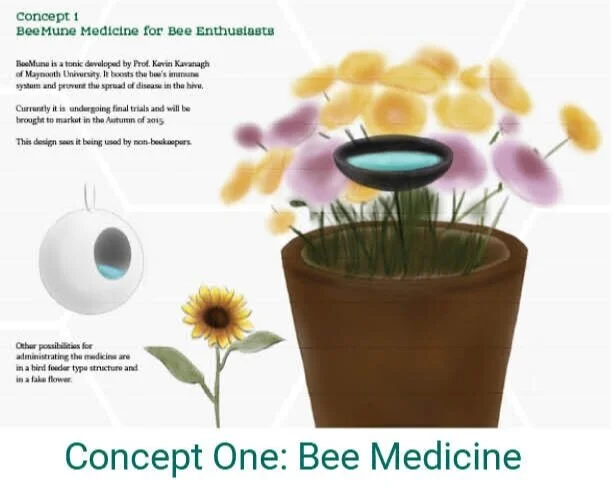
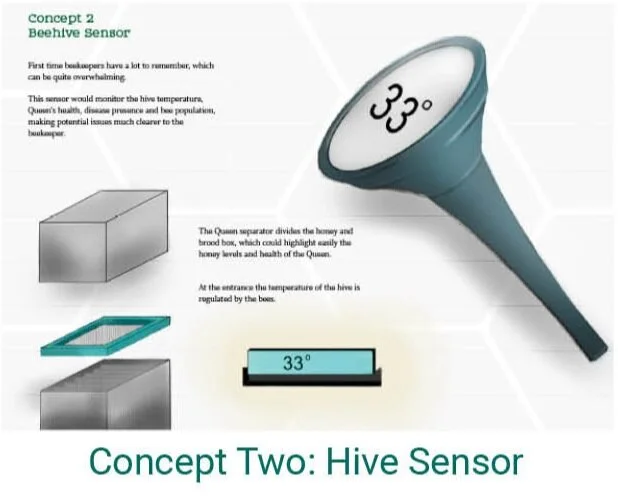
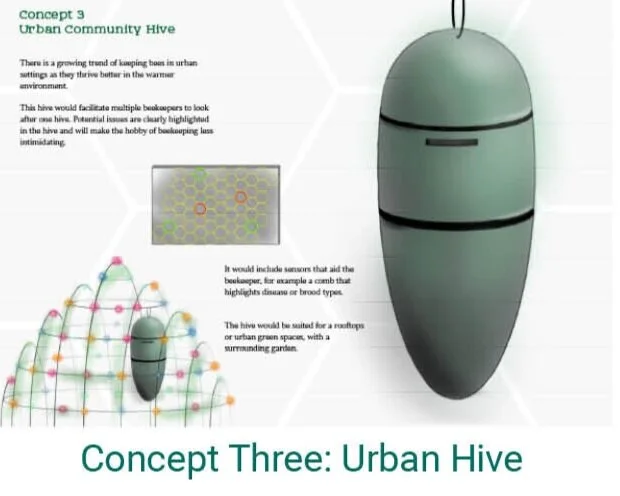
Inspiration
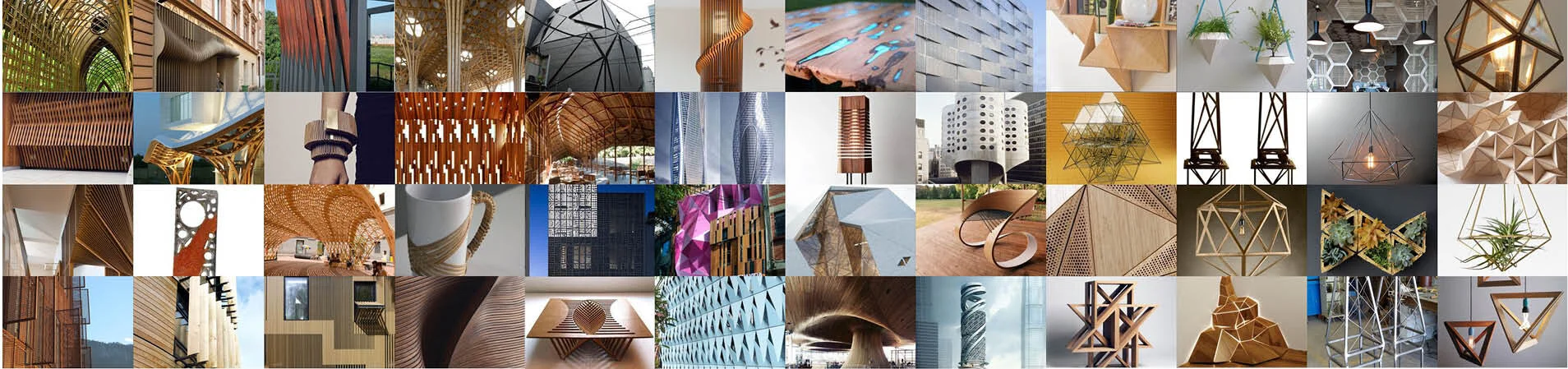
The next step of the process was to gather inspiration from many different sources that could be incorporated into the design.
Development
Further exploration into the design of the hive was then done, taking into consideration the constrictions associated with keeping bees. This included the aesthetic and functional aspects of the design.

Features
Decisions were then made by further research and ideation of the features of the design.
Community
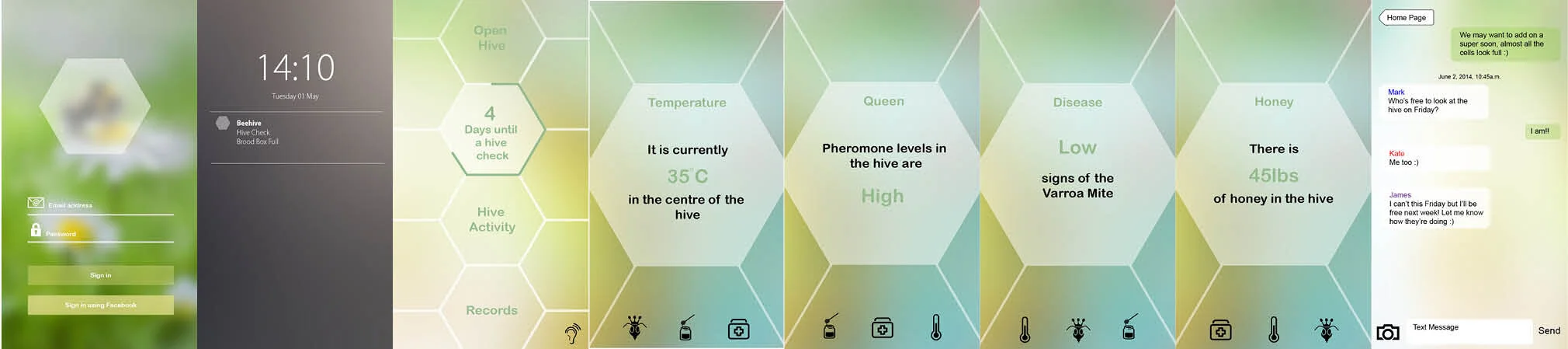
App - By incorporating an app to the hive, the different participants are kept up to date the health of the hive. This shared ownership alleviates the pressure of taking care of a hive on your own.
Honey - The process of extracting honey can be tedious and by having other people help, this would be an incentive to get involved.
Aesthetic Design - Creating a hive design that is intriguing and an addition to a garden.
Safety
Smoker - Built in smoker calms the bees before the hive is opened.
Viewing Windows - Tinted windows looking into the hive gives the keeper the option to look at the hive’s health without disturbing the bees.
Sensors - A lot can be measured by tracking the temperature, pheromone levels and weight of the hive. This information can alert a situation before it becomes a dangerous issue.
Prototyping
Initially shapes and forms were explored using paper prototypes. The mechanisms of the smoker option were also explored at this point. The next stage was the real size hive prototype that was made from wood.

Testing Stage
After the final prototype was built, feedback was gotten from experienced beekeepers and potential beekeepers. It was also tested in weather conditions. This is mainly an aesthetic prototype, so all of the features couldn’t be tested.
Experienced Beekeepers
Like the features to monitor the hive. Have had experience with their colonies dying from the Varroa mite, so a way to prevent this would be beneficial. Reluctant to change the way that beekeeping has been done for many years. Not as concerned about it looking nice in their garden
Potential Beekeepers
Like that it makes keeping bees more approachable. The safety features were especially appealing. Having the option to keep bees on a rooftop with neighbours sounded like a fun idea. Like that they would be able to have their own honey.
Final Product
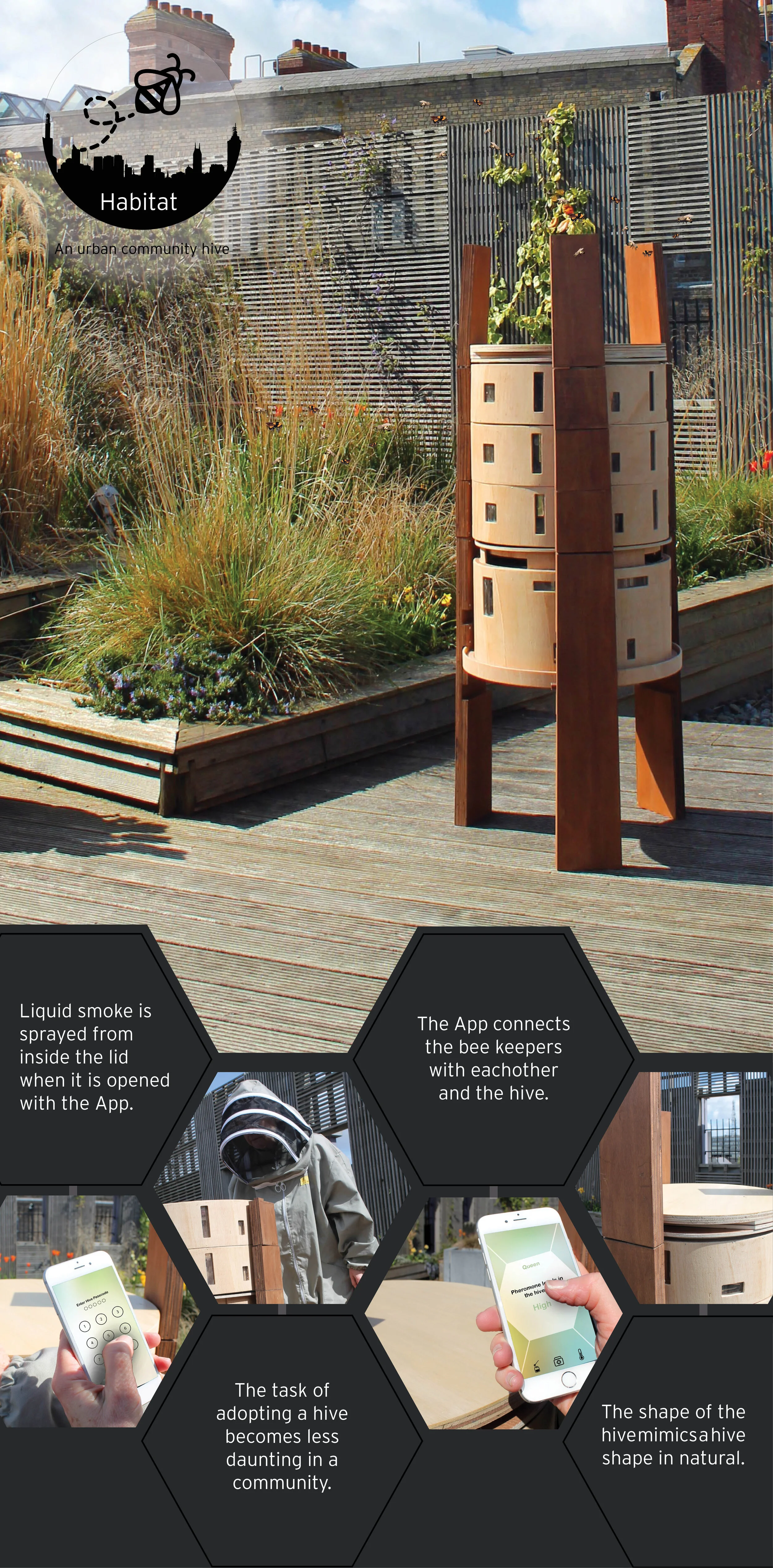
This final design is addressing the global decline of the bee population. People need to take on the responsibility of taking care of the colonies. That is why the final design is focused on making beekeeping approachable and easier to help the bees thrive.
The hive is installed with sensors that monitor the temperature of the hive (it should be between 35c - 37c), the pheromone levels (to assess the health of the Queen), the presence of the Varroa mite (by assessing the broods) and the weight of the hive (to know when the honey needs to be extracted). All this information is relayed to the beekeeper via the app. For safety reasons, the keeper must open the hive with the app. There is a built in smoker that smokes the hive before it can be opened. The hive also has viewing windows that the keeper can look in through so that bees don’t have to be disturbed unnecessarily.
Final Thoughts
After further reflection on this project, a more simplistic and approachable device that could be added to your own hive would be a better solution. This would include the features of the hive and would still be connected to your phone but could be used with your preferred hive scenario.